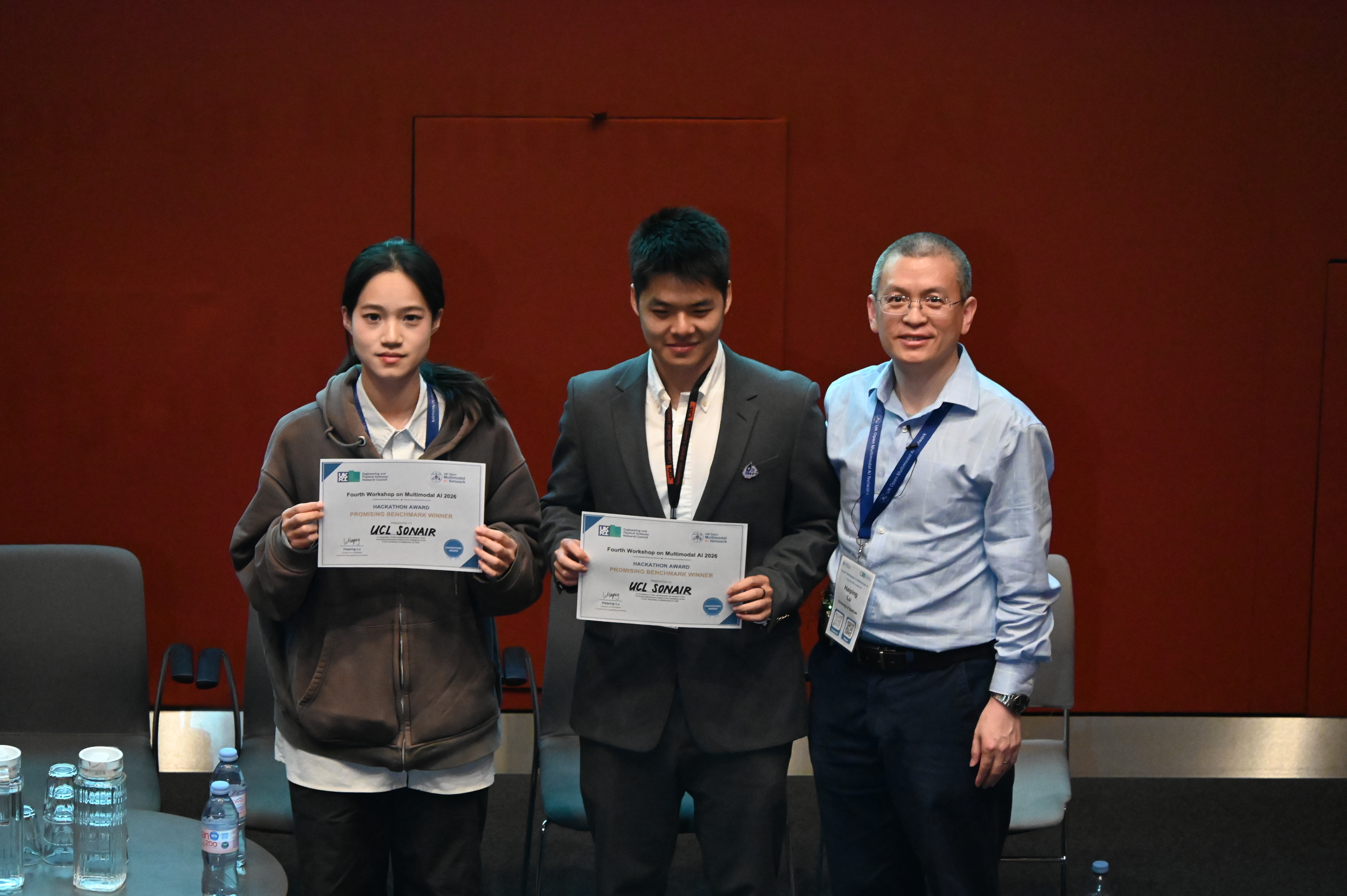
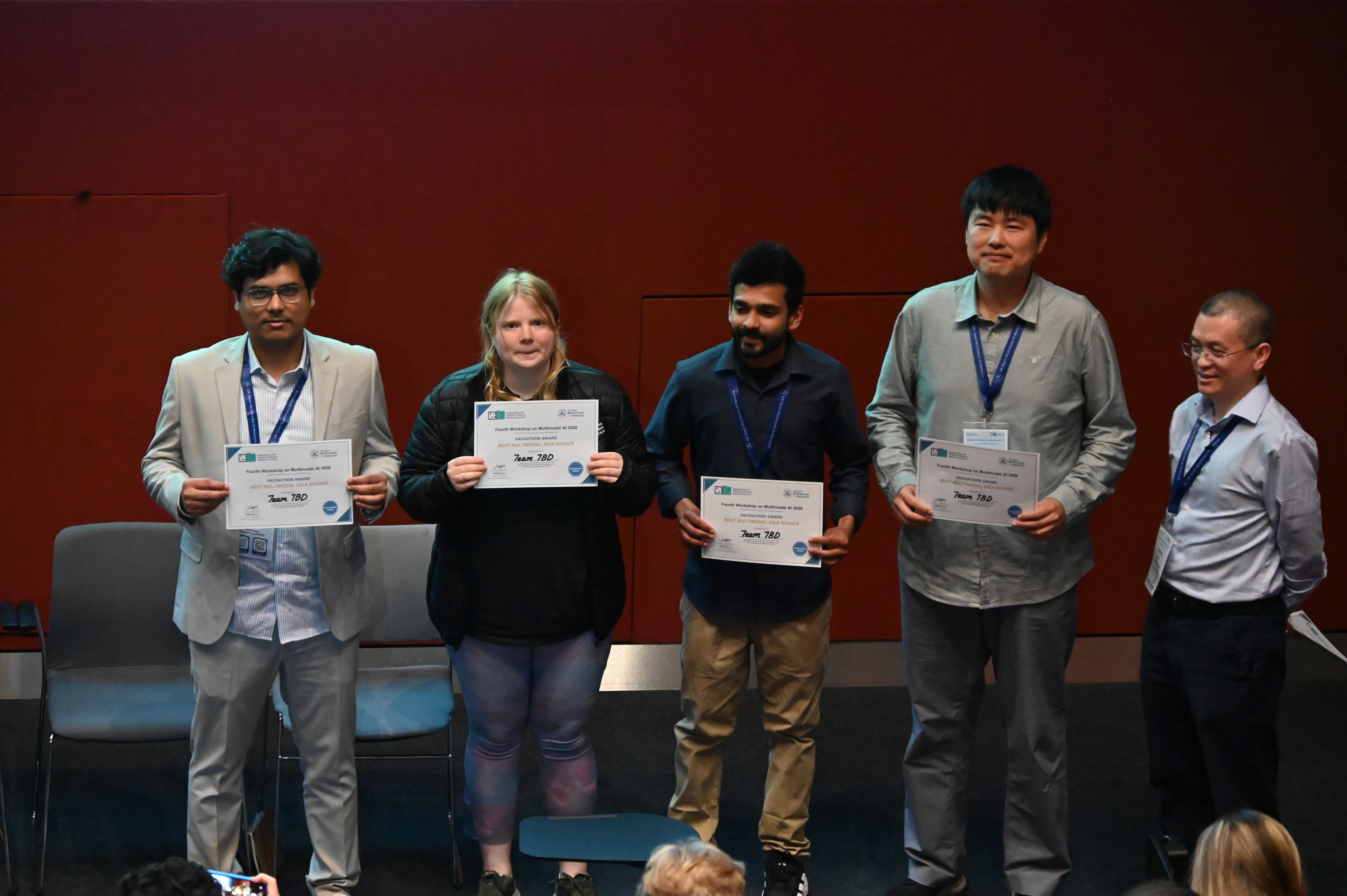
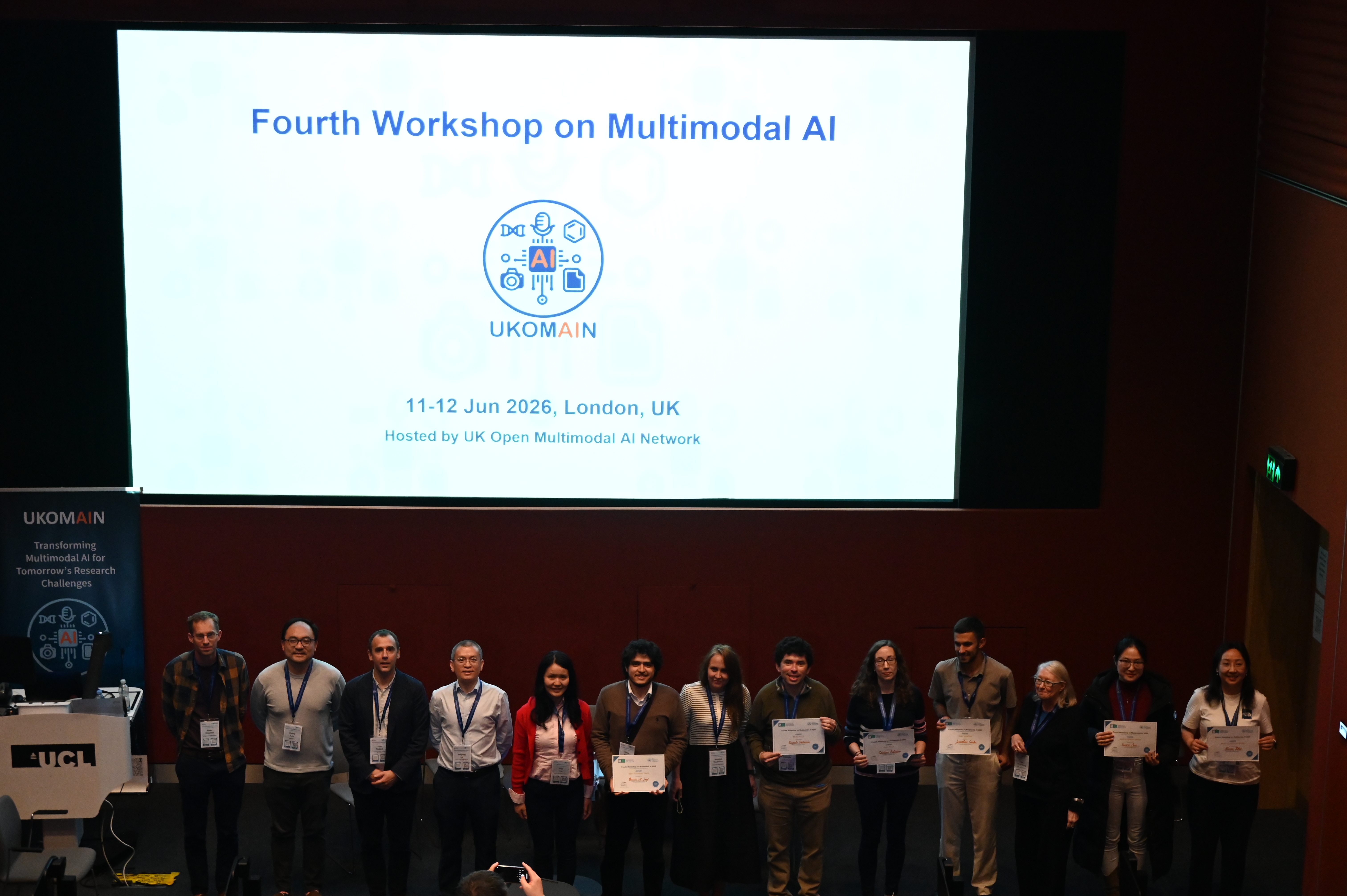
11–12 June 2026, UCL East Campus, One Pool Street, London, UK
Latest news:
We are pleased to invite you to join us for our Fourth Workshop on Multimodal AI (MultimodalAI’26), taking place on 11–12 June 2026 at the UCL East Campus, One Pool Street, London. This workshop was an in-person-only event, preceded by a full-day hackathon on 10th June.
Multimodal AI integrates diverse types of data, including text, images, audio, time series, graphs, and more. It is rapidly transforming how we engage with information and technology. MultimodalAI’26 will bring together researchers and practitioners from AI, data science, and related scientific and applied fields to discuss challenges, share innovative solutions, explore future collaborations, and strengthen the UK’s growing multimodal AI community.
The workshop is hosted by the UK Open Multimodal AI Network (UKOMAIN), a £1.8 million EPSRC Network Plus initiative. The programme will feature:
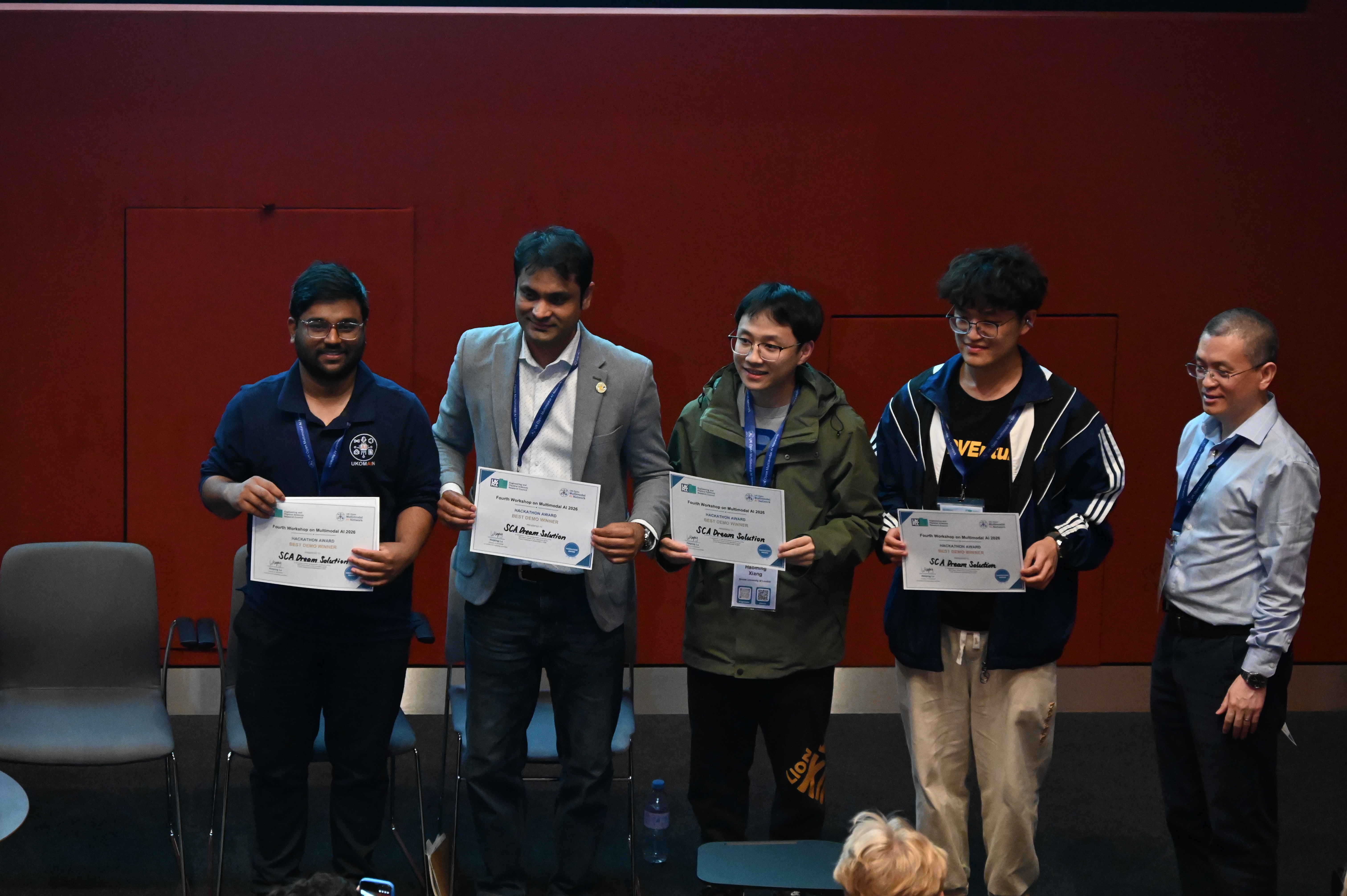
Prizes will be awarded for outstanding talks, pitches, posters, and hackathon contributions.

10 June 2026
| Time | Event |
|---|---|
| 09:30 – 18:00 | MultimodalAI'26 hackathon |
| 10:00 – 17:00 | MultimodalAI'26 workshop early registration |
Workshop Day 1: 11 June 2026
| Time | Event | |
|---|---|---|
| 09:30 – 10:00 | Registration, coffee/tea, and biscuits | |
| 10:00 – 10:15 | Welcome address: Amanda Brock, CEO at OpenUK | |
| 10:15 – 10:30 | Opening talk: Haiping Lu, Director, UK Open Multimodal AI Network | |
| 10:30 – 12:10 | Session 1 - Chairperson: Nicola Morley, University of Sheffield | |
| 10:30 – 11:10 | Keynote 1: Aron Walsh, CSO at CuspAI and Professor in Materials Design at Imperial College London | |

| Title: Materials on Demand | ||
| Abstract: The inverse design problem (given a target property or function, identify the optimal material) represents one of the central challenges in materials science. The landscape of materials theory and simulation is addressing this problem through the integration of new techniques and tools from the artificial intelligence (AI) community. Progress in hardware, including classical supercomputers and emerging quantum computers, alongside software advancements incorporating advanced algorithms and statistical machine learning models, is expanding what is now possible. A particular opportunity lies in multimodal AI, which can bridge heterogeneous data streams spanning computation, synthesis, and characterisation to build richer and more transferable representations of materials. Recent developments, such as large language models and generative diffusion techniques, are unlocking application areas ranging from multimodal characterisation to integration with self-driving laboratories. I will survey the evolution of data-driven approaches to materials on demand, highlighting their potential to expedite the identification of compounds essential for the next generation of clean energy technologies. The talk will close with reflections on the translation of academic research into emerging industry, with particular attention to the growing AI-for-materials ecosystem. | ||
| 11:10 – 11:45 | Community talks 1 | |
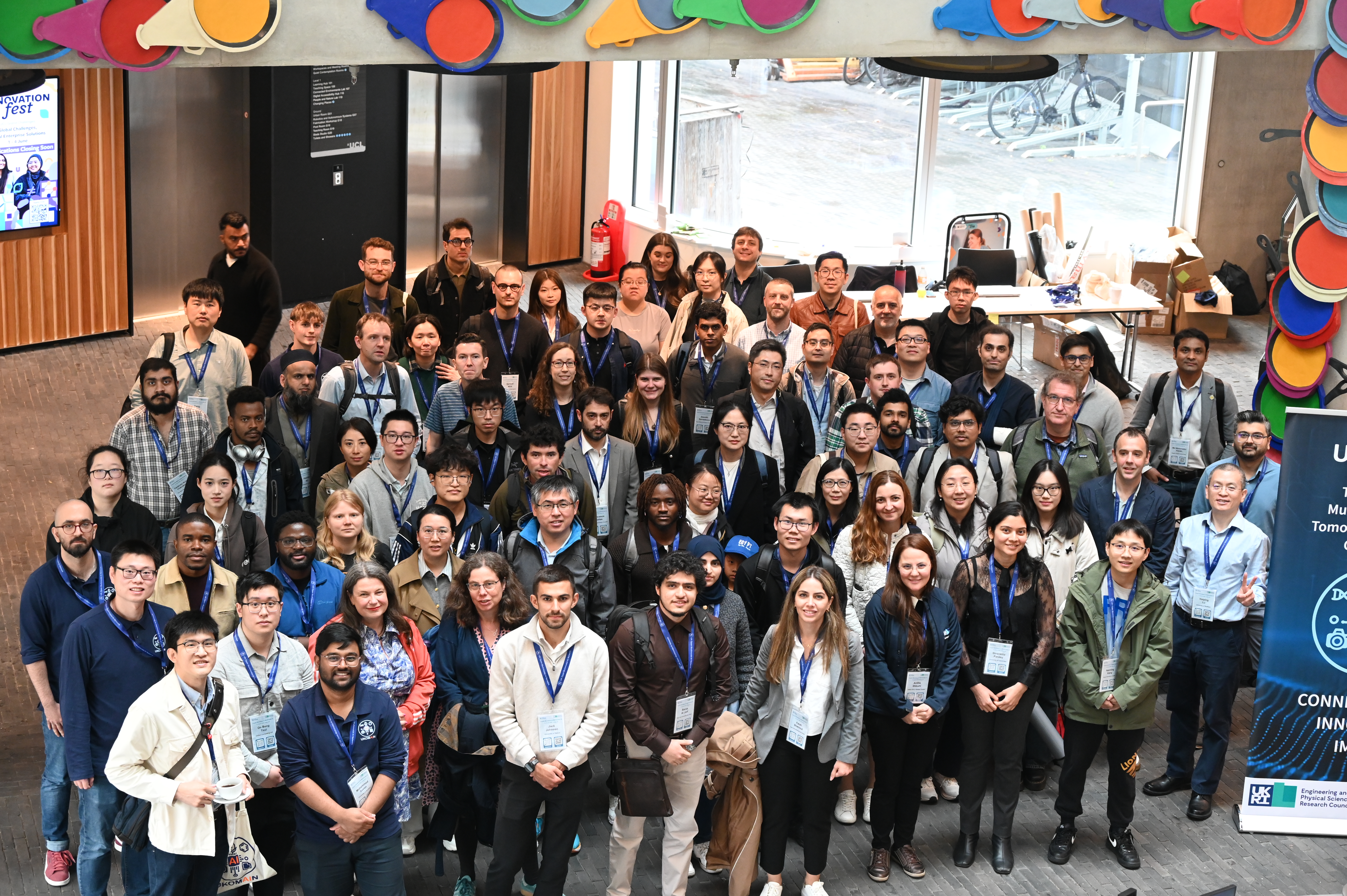
| 11:45 – 12:10 | Group photos | |
| 12:10 – 13:20 | Lunch and posters | |
| 13:20 – 14:50 | Session 2 - Chairperson: Dezong Zhao, University of Glasgow | |
| 13:20 – 14:00 | Keynote 2: Julia Hirschberg, Professor of Computer Science at Columbia University | |
| Title: Radicalization and De-Radicalization in Social Media | ||
| Abstract: Our prior work on radicalization focuses on Increasing our understanding of online radicalization efforts from analyzing right- and left-leaning group videos in social media including groups from outside the USA. We studied what viewers found the videos appealing, what techniques were employed in producing radical content, and how we could computationally identify these techniques. More recently we have worked to identify potentially effective de-radicalizing techniques and worked to build a unified multimodal processing pipeline toolkit to help us create conversational systems on social media that are useful in de-radicalizing viewers. | ||
| 14:00 – 14:30 | Community talks 2 | |
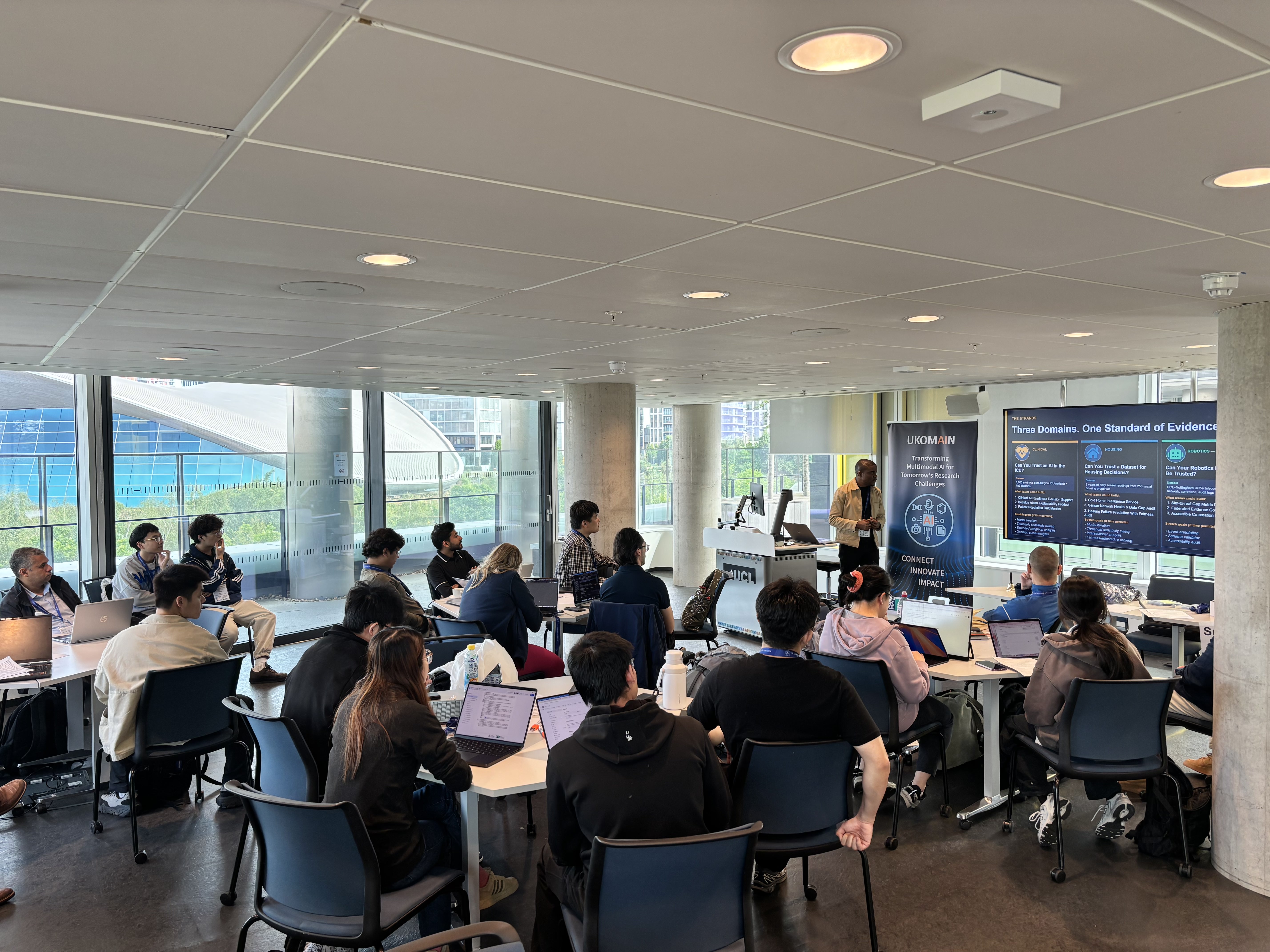
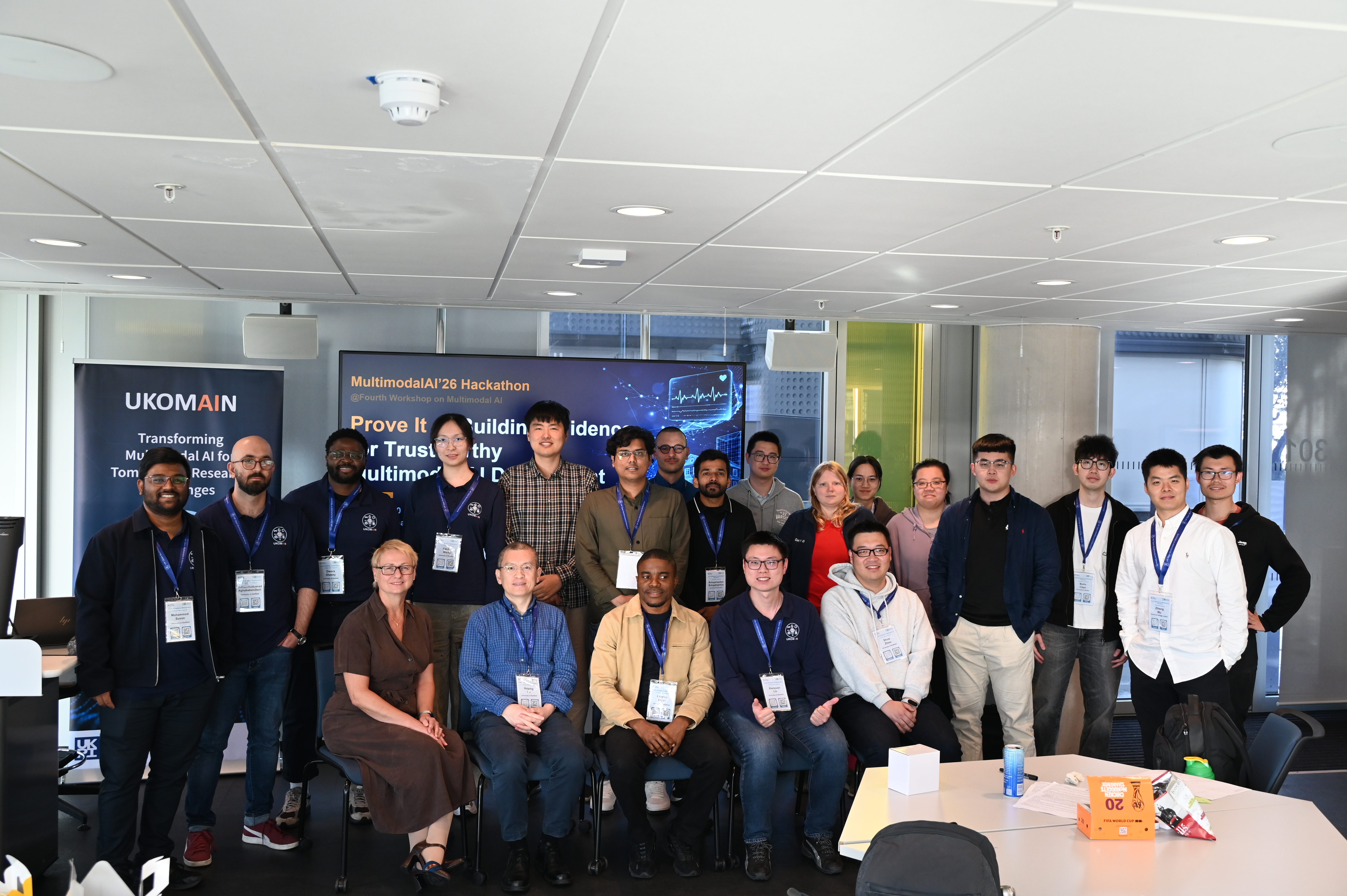
| 14:30 – 14:50 | Hackathon presentation | |
| 14:50 – 15:50 | Coffee/tea, biscuits, and posters | |
| 15:50 – 17:30 | Session 3 - Chairperson: Richard Gilham, Bristol Centre for Supercomputing | |
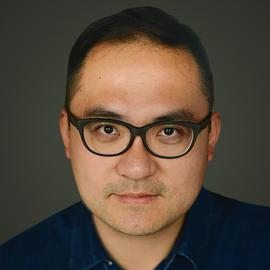
| 15:50 – 16:30 | Keynote 3: Chris Barnes, Head of Science of AI at National Physical Laboratory and Professor of Systems and Synthetic Biology at UCL | |
| Title: An Overview of AI at NPL | ||
| Abstract: The National Physical Laboratory (NPL) is the UK’s national metrology institute. It develops and maintains the country’s primary measurement standards and provides the measurement science, calibration, testing, and scientific expertise that underpin industry, innovation, and public services—helping ensure measurements are accurate, comparable, and trustworthy. In this talk, Chris Barnes (Head of Science for AI, NPL) will give an overview of NPL’s AI activity and how it supports the UK’s ambitions for trustworthy and deployable AI across industry. The talk is structured into three parts covering the main aspects of AI@NPL. First, Trustworthy AI: how measurement thinking translates into AI practice, covering concepts such as uncertainty, robustness, interpretability, and data quality, and how these properties can be characterised, tested, and compared in a repeatable way. Second, AI for Metrology: examples of how modern machine learning can be used to enhance the scientific process. Third, AI assurance: the emerging methods, standards, and evaluation approaches needed to build justified confidence in AI systems for critical applications. | ||
| 16:30 – 17:30 | Research Panel: From Models to Evidence: Making Multimodal AI Deployable | |
| Question 1: What community outputs would most help multimodal AI move from research promise to real-world deployment? | ||
| Question 2: What evidence should researchers provide before claiming a multimodal AI system is trustworthy enough for real-world use? | ||
| 17:20 – 17:30 | Hackathon winner announcement | |
| 17:30 – 20:00 | Networking Reception: UKOMAIN Connections Corners | |
| Informal networking around three themes: • Funding, Proposals & Collaborators • Evidence, Evaluation & Responsible Deployment • Careers, Mentoring & Inclusive Leadership |
Workshop Day 2: 12 June 2026
| Time | Event | |
|---|---|---|
| 08:30 – 09:00 | Registration, coffee/tea, and biscuits | |
| 09:00 – 10:25 | Session 4 - Chairperson: Nataliya Tkachenko, Lloyds Banking Group | |
| 09:00 – 09:20 | Invited talk: Andy Lawrence, Head of Engineering at EPSRC | |
| 09:20 – 10:00 | Keynote 4: Henry Lee, CEO at Cultivarium | |
| Title: Scaling Biological Expertise | ||
| Abstract: Cultivarium builds scientific tools that turn biological discovery into real-world capability. Remarkable genetic capabilities and chemistries useful for beneficial biotechnologies can be found in natural biological systems, yet nearly all of them sit outside today’s laboratory. To make the vast number of non-model organisms available for reproducible laboratory study, we have built a technology platform for domesticating them, compressing the typical time frame from decades to days. In this talk I will trace our journey from deterministic software to AI tooling for accelerating scientific discovery, biological engineering, and the real-world deployment of knowledge systems. Hermes, our large language model (LLM) harness, helps scientists navigate existing knowledge, generate hypotheses, and run analyses across iterative discovery campaigns. PRISM, our vision-language model (VLM) harness, captures experimental work as audio and video feeds to generate traceable documentation and surface tacit knowledge that is otherwise earned one scientist at a time. These multimodal AI tools form the basis for a new software stack for embedding and distributing expertise, accelerating progress in frontier biology research programs. | ||
| 10:00 – 10:25 | OMAIB project showcase | |
| 10:25 – 11:25 | Coffee/tea, biscuits, and posters | |
| 11:25 – 13:00 | Session 5 - Chairperson: Fei He, Coventry University | |
| 11:25 – 12:05 | Keynote 5: Zoe Kourtzi, Professor of Cognitive Computational Neuroscience at University of Cambridge and CSO at Prodromic | |
| Title: Multimodal AI for Early Dementia Prediction: From Cloud to Clinic | ||
| Abstract: Early prediction of brain (e.g. neurodegenerative) disorders is key for clinical management and patient outcomes. Predicting whether individuals with mild cognitive impairment or people without symptoms will decline or remain stable is impeded by patient heterogeneity due to comorbidities, lifestyle and disease severity. Despite the importance of early diagnosis of dementia for prognosis and personalised interventions, we still lack robust tools for predicting individual progression. We propose a novel clinical AI predictive prognostic modelling approach that mines multimodal data to derive an individualised prognostic marker of cognitive decline at early stages of dementia or before symptoms occur. We validate our approach against routinely collected real-world patient data from memory clinics over time, showing that our clinical AI marker is more sensitive than the standard of care (cognitive tests, MRI scans). Our clinical AI approach has strong potential to facilitate effective patient stratification into clinical pathways and trials, reducing patient misdiagnosis and enhancing trial efficiency with important implications for clinical translation and drug discovery. | ||
| 12:05 – 12:15 | Invited talk: Jake Bowden, Bioinformatician at Twig Bio | |
| Title: Canopy: A Heterograph Foundation Model for Metabolic Engineering | ||
| 12:15 – 12:25 | Invited talk: Farah Shamout, Assistant Professor of Computer Engineering at NYU Abu Dhabi | |
| Title: Multimodal AI for Patient-Centered Healthcare Technologies | ||
| 12:25 – 13:00 | Community talks 3 | |
| 13:00 – 14:00 | Lunch and posters | |
| 14:00 – 16:00 | Session 6 - Chairperson: Peter Charlton, UKOMAIN Executive Board | |
| 14:00 – 14:40 | Keynote 6: Tom Pollard, Research Scientist at Massachusetts Institute of Technology and Technical Director of PhysioNet | |

| Title: Data for Health AI in a Time of Change | ||
| Abstract: We will explore how the health AI community is moving from an era focused mainly on model building to one that must confront deeper questions about data quality, access, governance, and representation. Using examples from recent controversies in medical AI and from the development of open research resources such as PhysioNet and MIMIC, the talk will argue that progress now depends on creating data ecosystems that are more trustworthy, more reusable, and more faithful to the realities of clinical care. | ||
| 14:40 – 15:30 | Career Panel: Building a Sustainable Research Career in Multimodal AI | |
| Question 1: How should early-career researchers decide which leadership, service or network opportunities to take on — and which to decline? | ||
| Question 2: Beyond papers, what skills will matter most for the next generation of multimodal AI researchers? | ||
| 15:30 – 15:50 | Presentation winner announcement | |
| 15:50 – 16:00 | Closing remarks | |
| 16:00 – 17:00 | Post-workshop networking |
| Close Date | ||
|---|---|---|
| Call for Abstracts | Wed, 6th May | |
| | |
| Abstract Acceptance Notification | Mon, 11th May | |
| | |
| Early Bird Registration | Closes when full or Mon, 18th May | |
| | |
| Cancellation Deadline (with refund) | Tue, 26th May | |
| | |
| Call for Volunteers | Wed, 6th May | |
| | |
| Volunteer Acceptance Notification | Mon, 11th May | |
| | |
| Travel Bursary for Inclusive Participation | Wed, 6th May | |
| | |
| Travel Bursary Decision Notification | Mon, 11th May | |
| | |
Email the organisers: multimodalai26-group@sheffield.ac.uk