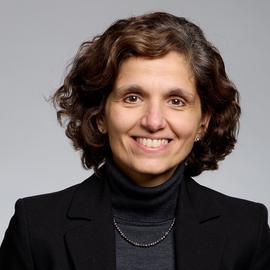
Zoe Kourtzi
Professor of Cognitive Computational Neuroscience at University of Cambridge and CSO at Prodromic
Zoe Kourtzi is a Professor of Cognitive Computational Neuroscience at the University of Cambridge. Zoe’s research aims to understand the role of lifelong learning and brain plasticity in enabling humans of all ages to translate sensory experience into adaptive behaviour. Her computational work aims to develop predictive models, powered by AI, for neurodegenerative and mental health disorders with translational impact in early diagnosis and personalised interventions.
Zoe received her PhD from Rutgers University and was a postdoctoral fellow at MIT and Harvard. She was a Senior Research Scientist at the Max Planck Institute for Biological Cybernetics and then a Chair in Brain Imaging at the University of Birmingham, before moving to the University of Cambridge in 2013. She is a Royal Society Industry Fellow, Responsible AI fellow, Cambridge University Lead at the Alan Turing Institute, Co-director of Cambridge’s Centre for Data Driven Discovery, and Lead of the BrainHealthx Hub.
MultimodalAI'26 Keynote Title: Multimodal AI for early dementia prediction: from cloud to clinic
MultimodalAI'26 Keynote Abstract: Early prediction of brain (e.g. neurodegenerative) disorders is key for clinical management and patient outcomes. Predicting whether individuals with mild cognitive impairment or people without symptoms will decline or remain stable is impeded by patient heterogeneity due to comorbidities, lifestyle and disease severity. Despite the importance of early diagnosis of dementia for prognosis and personalised interventions, we still lack robust tools for predicting individual progression. We propose a novel clinical AI predictive prognostic modelling approach that mines multimodal data to derive an individualised prognostic marker of cognitive decline at early stages of dementia or before symptoms occur. We validate our approach against routinely collected real-world patient data from memory clinics over time, showing that our clinical AI marker is more sensitive than the standard of care (cognitive tests, MRI scans). Our clinical AI approach has strong potential to facilitate effective patient stratification into clinical pathways and trials, reducing patient misdiagnosis and enhancing trial efficiency with important implications for clinical translation and drug discovery.