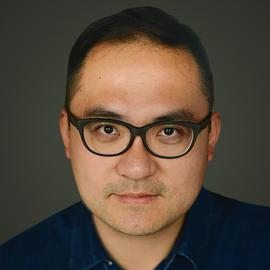
Henry Lee
CEO at Cultivarium
Henry H. Lee, PhD is CEO & co-founder of Cultivarium, a non-profit applied research lab building the scientific tools and infrastructure to study and engineer the living world for applications spanning nutrition, materials, and medicines. With support from organizations such as Schmidt Futures and the Wellcome Trust, Cultivarium has accelerated the engineering of new-to-lab microbes by more than 100-fold, working with over 500 organisms ranging from alkaliphiles that form biocement to filamentous fungi that can grow habitats for off-world living.
He is interested in engineering approaches for understanding biology across the tree of life: bacteria, archaea, fungi, and higher eukaryotes. He has a Bachelor’s in Electrical Engineering from the University of Washington and a PhD in Biomedical Engineering from Boston University with James J. Collins. As a postdoctoral fellow in Genetics at Harvard Medical School with George Church, he domesticated the ultrafast-growing bacterium Vibrio natriegens and pioneered enzymatic DNA-synthesis methods now enabling DNA data storage. He has co-founded three startups, authored eleven issued or pending patents, and co-chairs the Department of War BioMADE subcommittee on Strain and Strain Engineering. His current focus is an engineering biology platform that leverages software and hardware to domesticate the entire biosphere, turning it into reusable infrastructure for beneficial biotechnologies.
MultimodalAI'26 Keynote Title: Scaling Biological Expertise
MultimodalAI'26 Keynote Abstract: Cultivarium builds scientific tools that turn biological discovery into real-world capability. Remarkable genetic capabilities and chemistries useful for beneficial biotechnologies can be found in natural biological systems, yet nearly all of them sit outside today’s laboratory. To make the vast number of non-model organisms available for reproducible laboratory study, we have built a technology platform for domesticating them, compressing the typical time frame from decades to days. In this talk I will trace our journey from deterministic software to AI tooling for accelerating scientific discovery, biological engineering, and the real-world deployment of knowledge systems. Hermes, our large language model (LLM) harness, helps scientists navigate existing knowledge, generate hypotheses, and run analyses across iterative discovery campaigns. PRISM, our vision-language model (VLM) harness, captures experimental work as audio and video feeds to generate traceable documentation and surface tacit knowledge that is otherwise earned one scientist at a time. These multimodal AI tools form the basis for a new software stack for embedding and distributing expertise, accelerating progress in frontier biology research programs.